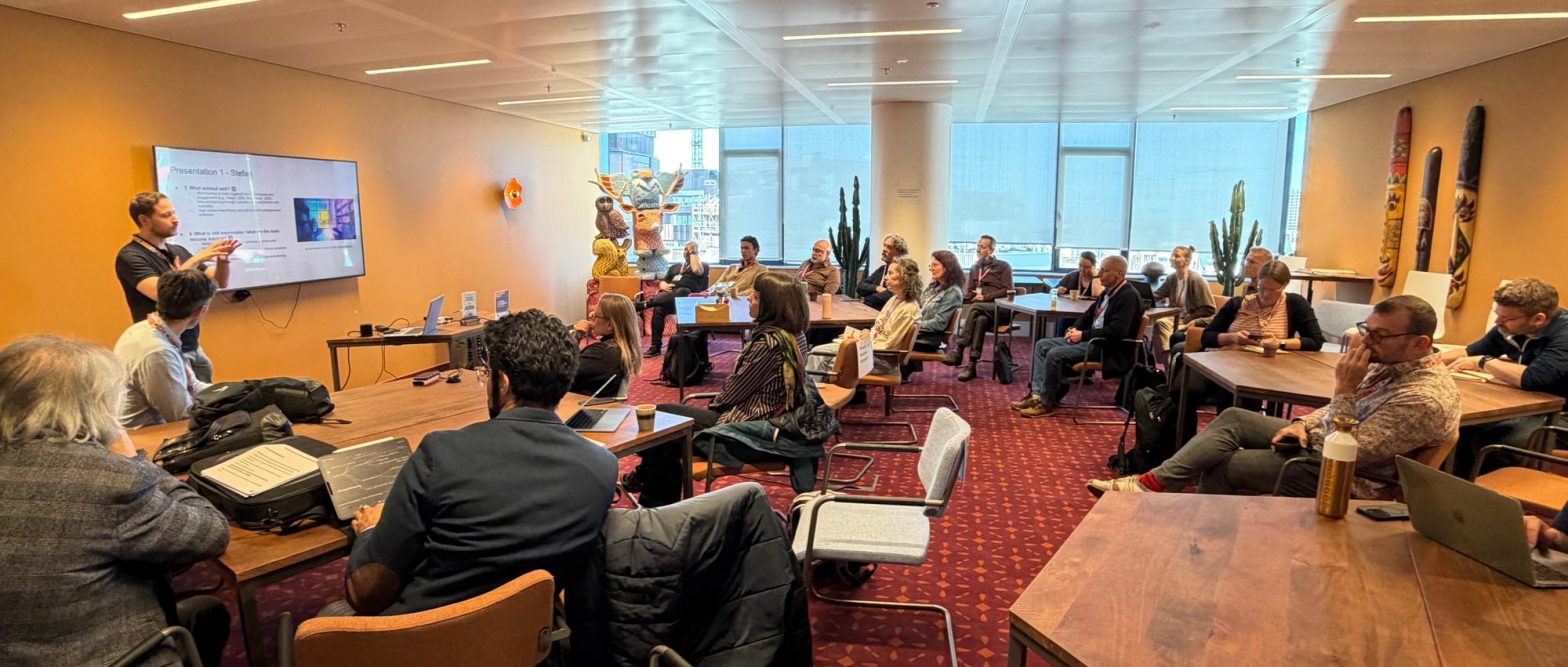
Last month, I had the privilege of participating in the PKM Summit 2026 in Utrecht, where I contributed to two sessions that explored the intersection of Personal Knowledge Management (PKM), education, and the visibility of competences. The summit brought together practitioners, educators, and researchers to discuss how PKM can be integrated into real-world contexts.
Session 1: Knowledge from the Trenches – Lessons Learned From 1 Year Trying to Bring PKM into College
Collaborators: Bianca Pereira, Marleen Hoenink, and colleagues
In this session, we reflected on a year-long experiment: bringing PKM into college classrooms. One year ago, a group of us met at the PKM Summit and committed to testing PKM in educational settings. The results were illuminating, messy, however deeply instructive.
Session 2: Making Competences Visible with Tools for Thought
Collaborators: Prof. Dr. Maik Arnold, Marco Strate, Prof. Dr. Bernadette Dilger
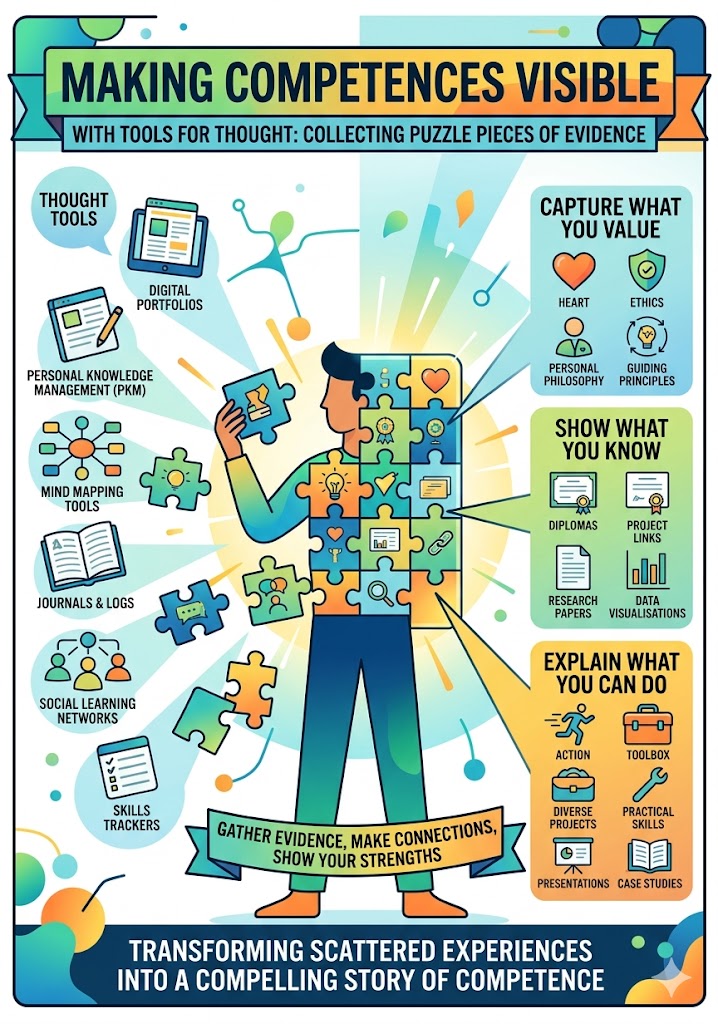
In this session, we addressed a critical challenge for knowledge workers: How do we make our competences visible? Much of the knowledge we accumulate—notes, insights, decisions—remains invisible to others, locked away in personal files or tools. Yet, these artifacts are puzzle pieces of evidence of our skills, values, and knowledge.
Reflections
The PKM Summit 2026 reinforced a crucial insight: PKM is not just about tools or workflows, but about making knowledge and competences actionable and visible.
I am grateful to the PKM community for the vibrant discussions and look forward to continuing this work. If you’re interested in exploring these ideas further, feel free to reach out or connect via NoteLab.
Further Reading: